
For freedom and self-determination – National Day Greece
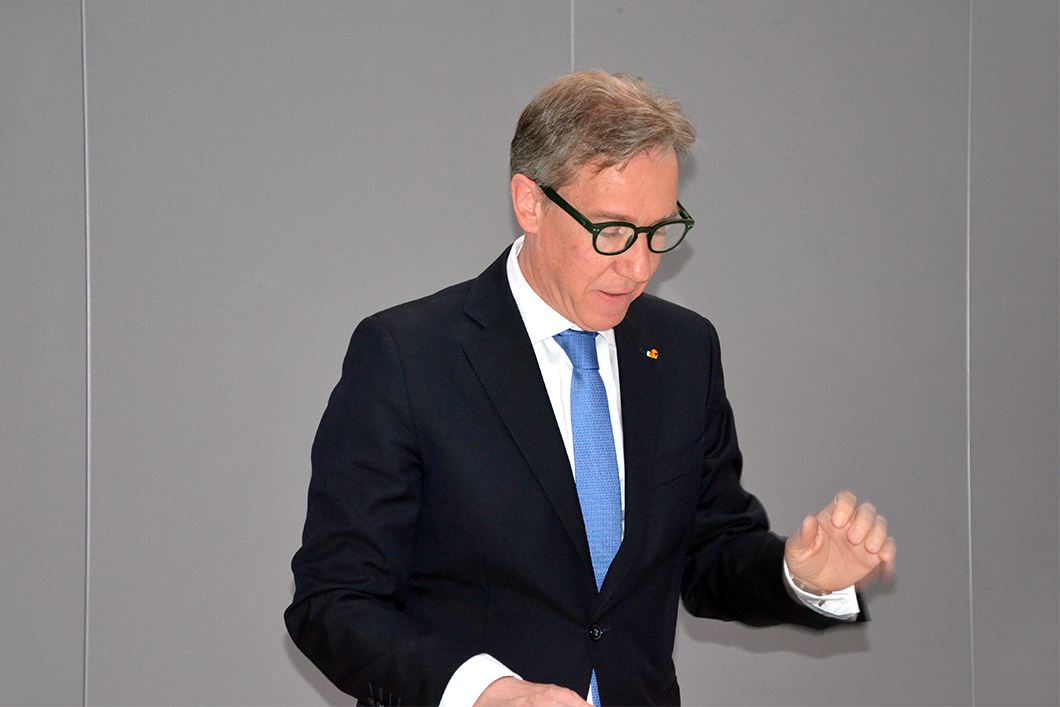
H.E. Alexandros Papaioannou, Ambassador of Greece, during his opening address
His role as ambassador is to bring Germany and Greece closer together – politically, economically and culturally – to recall their shared history and culture, and to preserve historical memory, for example by commemorating the Jewish community of Thessaloniki. He made special mention of the exhibition at the Greek community in Berlin, which highlights the role of various regional groups, including Pontic Greeks and Cretans, during the Greek Revolution.
Gunther Krichbaum, Member of the Bundestag and Chair of the Committee on European Union Affairs, emphasised the close, friendly relations – despite difficult periods in history. He thanked the many individuals working to promote German-Greek relations, specifically Thomas Rachel, Chair of the German-Greek Parliamentary Group, and praised the German-Greek Youth Organisation, now in its fifth year, as a result of this work.
Krichbaum also recalled the exhibition on the Greek War of Independence of 1821, a pivotal turning point in European history that marked the end of Ottoman occupation. He thus drew a connection to the present day, to the war in Ukraine, and appealed to Europeans’ shared responsibility and common values.
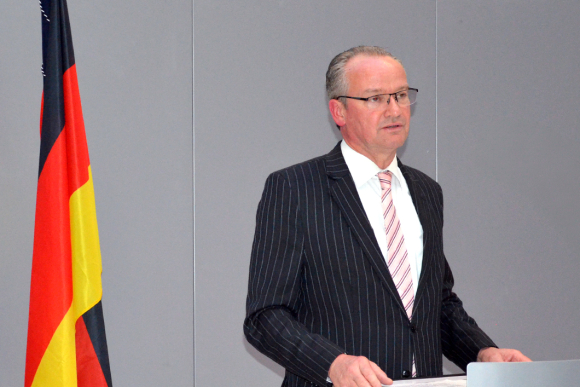
Guest speaker Gunther Krichbaum, Member of the German Bundestag
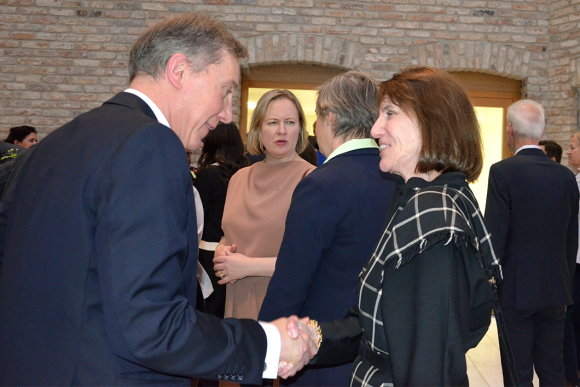
H.E. Alexandros Papaioannou, Ambassador of Greece, and H.E. Betina Alejandra Pasquali, Ambassador of Argentina. In the background (centre): H.E. Marika Linntam, Ambassador of Estonia; H.E. Alda Vanaga, Ambassador of Latvia
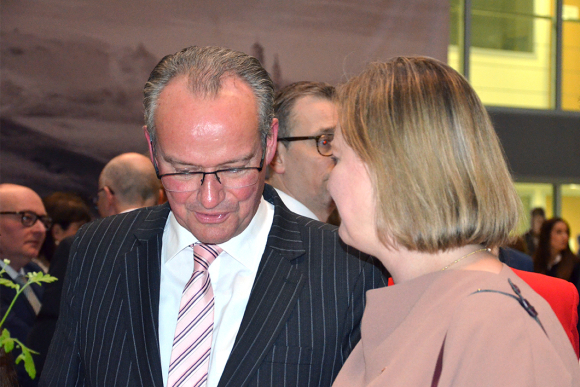
Gunther Krichbaum and H.E. Marika Linntam, Ambassador of Estonia
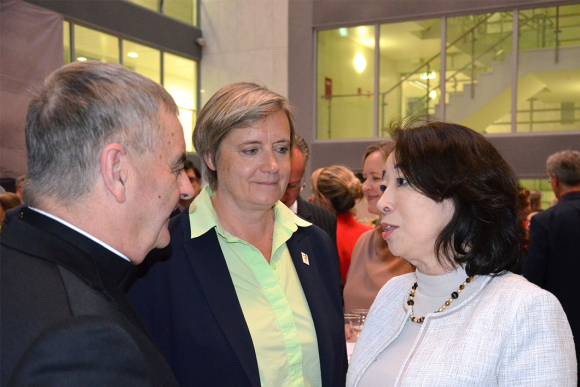
From left: H.E. Archbishop Dr Nikola Eterović, Dean of the Diplomatic Corps; H.E. Alda Vanaga, Ambassador of Latvia; H.E. Mitsuko Shino, Ambassador of Japan
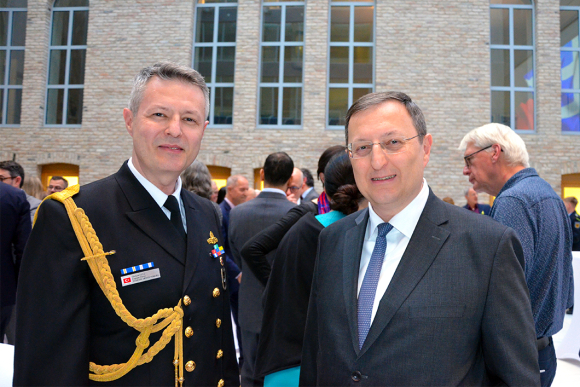
From left: Görkem Uçlu, Turkish Armed Forces; H.E. Gökhan Turan, Ambassador of Turkey
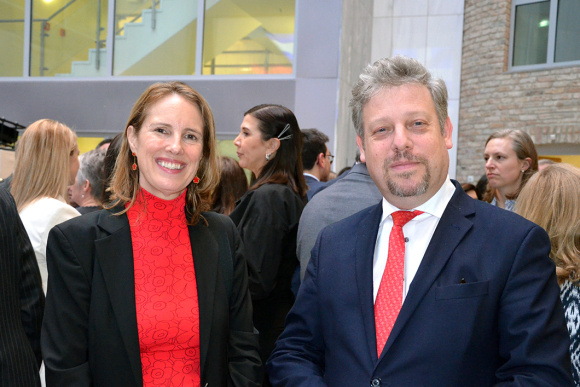
Evelyne Coulombe, Canada’s Deputy Ambassador, and H.E. Piet Heirbaut, Ambassador of Belgium